A house that keeps up in August.
The size your house actually needs, worked out here, before anyone comes to sell you a system.
What size does this house actually need?
Pick the house closest to yours and this works out the load the way the standard says to, with every step shown.
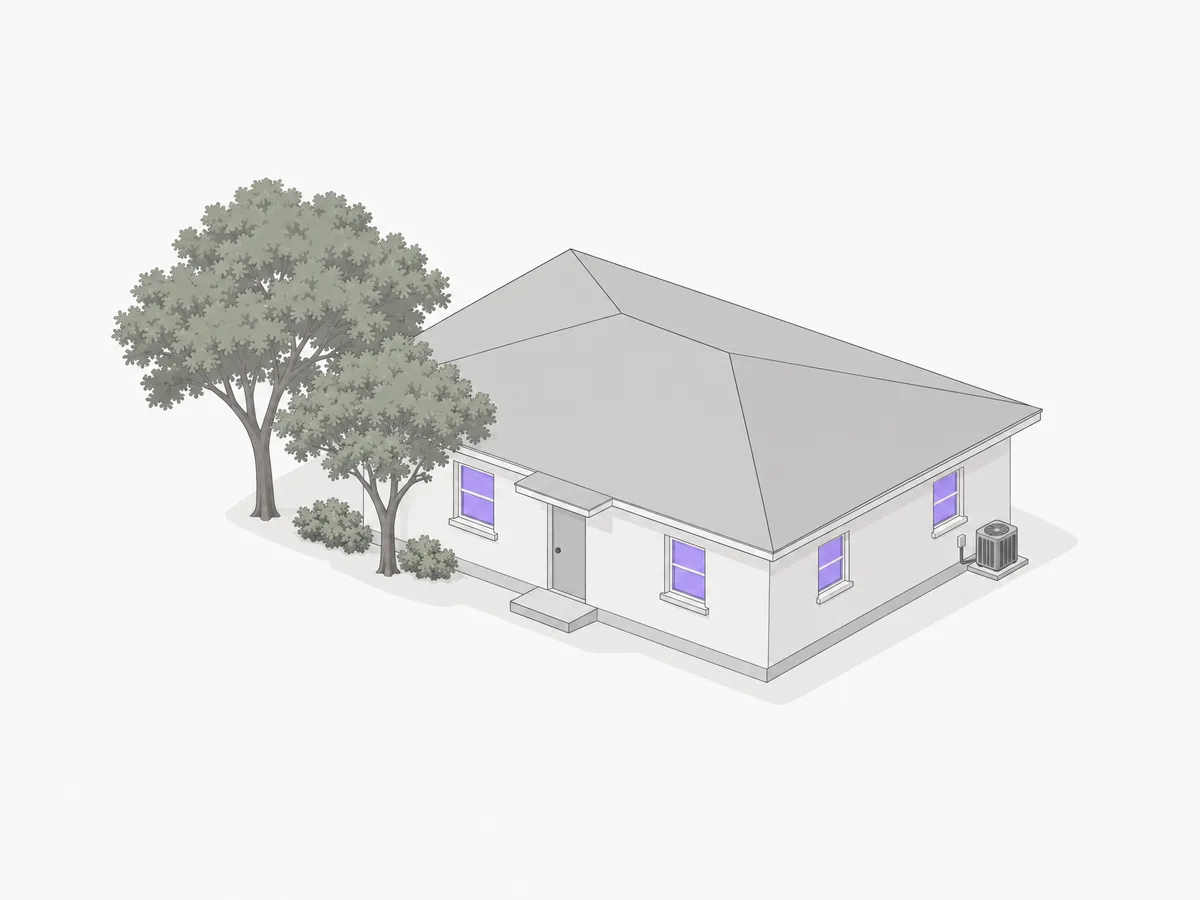
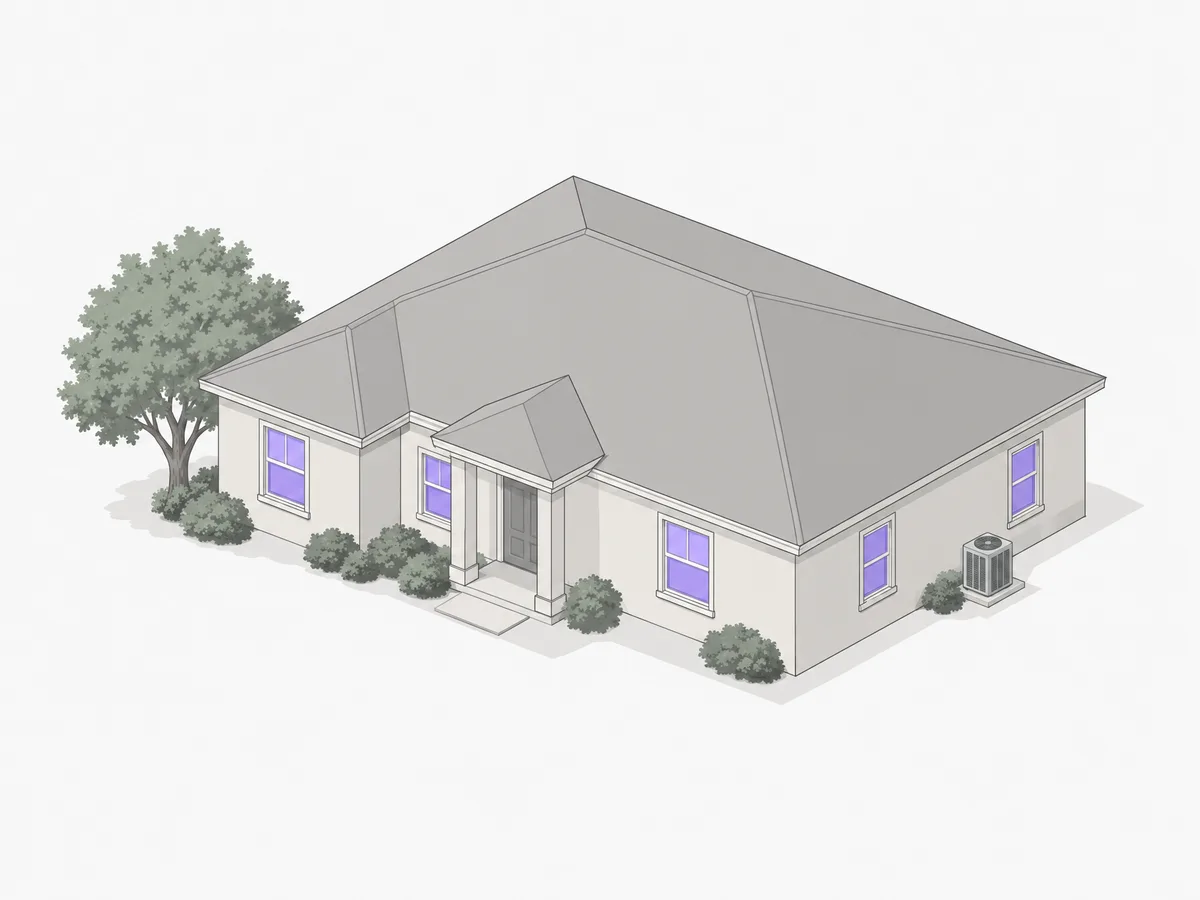
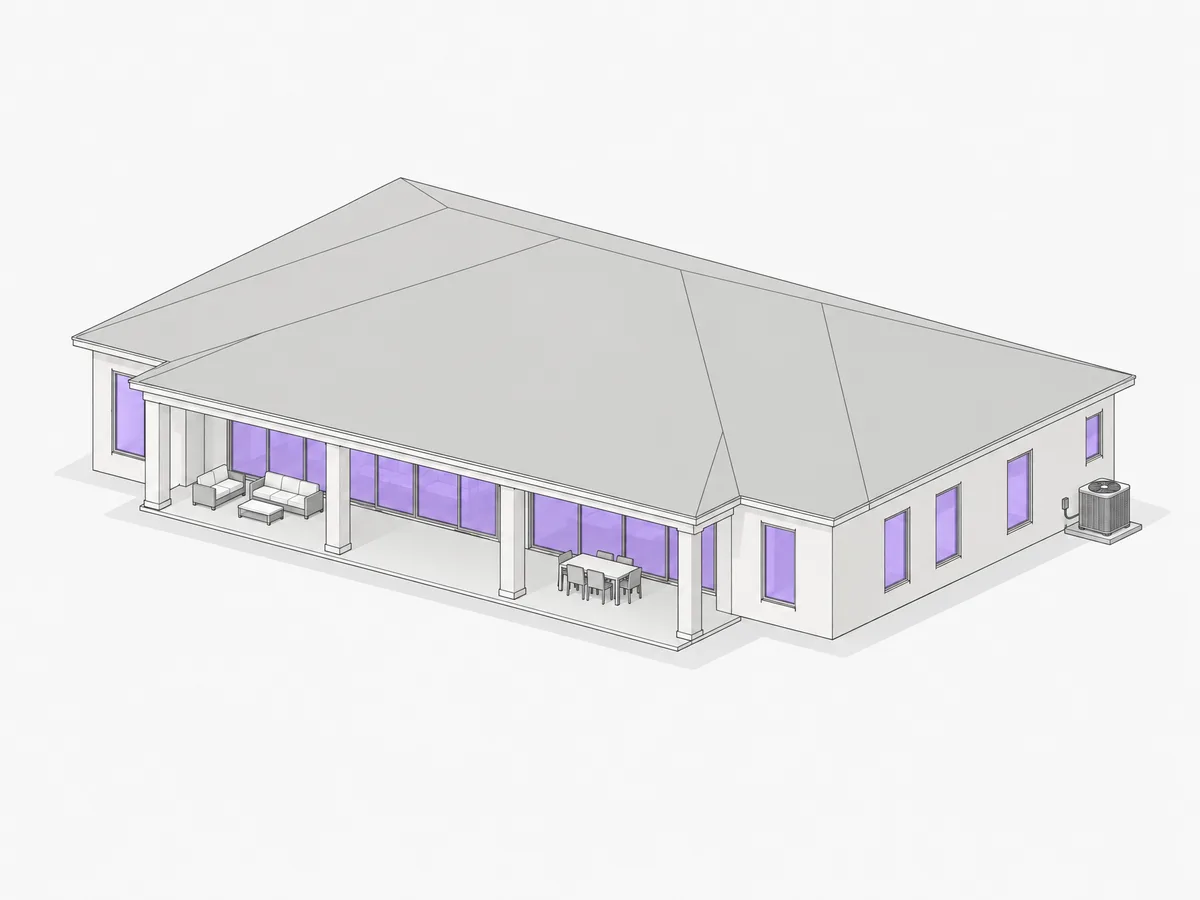
What this house needs
3.5 tons
- 1,800 sq ft × 15 BTU
- 27,000
- 9 to 10 ft+8%
- 29,160
- Average+8%
- 31,493
- South+4%
- 32,753
- Topped up at some point+11%
- 36,355
- Some+7%
- 38,900
- 38,900 BTU/h ÷ 12,000
- 3.24 tons
Rounded up to 3.5, because equipment is only made in 2, 2.5, 3, 3.5, 4, 5. Never down: a system chosen below the load runs out of capacity on the hottest day.
An estimate, not a Manual J. The real one is measured room by room in the house, before we sell anything.
A rule of thumb puts this same house at 4 tons — 0.5 tons above what the calculation says. That is the gap you are quoted inside.
Pick the house closest to yours above, or open the detail and change any one factor.
Too big is not a safety margin.
It is the most common fault in a Florida house and the one nobody gets told about, because a bigger unit costs more and sounds safer. Here is what it actually does.
- 01
It stops before it has dried the air
It only pulls humidity out while it runs. An oversized one reaches 74 degrees fast and shuts off, so the house is cold and still damp.
- 02
It starts and stops all day
Short cycling is hardest on the compressor, which is the expensive part. More starts a day is fewer years before the first big bill.
- 03
You paid more for it
A half-ton up is several hundred to a couple of thousand dollars, spent to make the house less comfortable.
What that size costs, installed
That size, in the three tiers it is made in, drawn on one scale so you can see how far apart they really are.
at 3.5 tons
Fitted, at that size
$9,250 to $13,750
Two-stage, at the size the calculation came to.
The size and the tier travel with you, so the form only asks what is left.
The three tiers, on one scale
Single-stage
$7,250 to $10,500Two-stage
$9,250 to $13,750Variable-speed
$12,000 to $18,250
Two-stage and Variable-speed overlap by $1,750 at this size. The top of one range sits above the bottom of the next, so what you pay turns on the duct work and the day more than on which box goes in.
What a straightforward changeout runs to around here. None of it is a quote: that is a single figure, once the calculation is done in the house and the return is measured.
What the efficiency actually buys back.
Every quote offers a tier up. Here is what the step costs at your size, what it saves in a summer, and how long that takes to cover.
Two-stage, 16 SEER2
Runs on low most of the time, which is most of the comfort gain.
- What the step up costs
- $2,000
- What it saves each summer
- $260
- So it pays for itself in
- 7.7 summers to break even
10-year warranty
Variable-speed, 18 SEER2
Runs almost continuously at low speed. The driest house of the three.
- What the step up costs
- $4,750
- What it saves each summer
- $460
- So it pays for itself in
- 10.3 summers to break even
12-year warranty
A longer wait than most people expect. Buy a higher tier for how the house feels, not for the bill.
What decides whether it works.
None of this is on a quote, and all of it decides whether the system you bought performs like the one on the label. Ask any company that quotes you about all four.
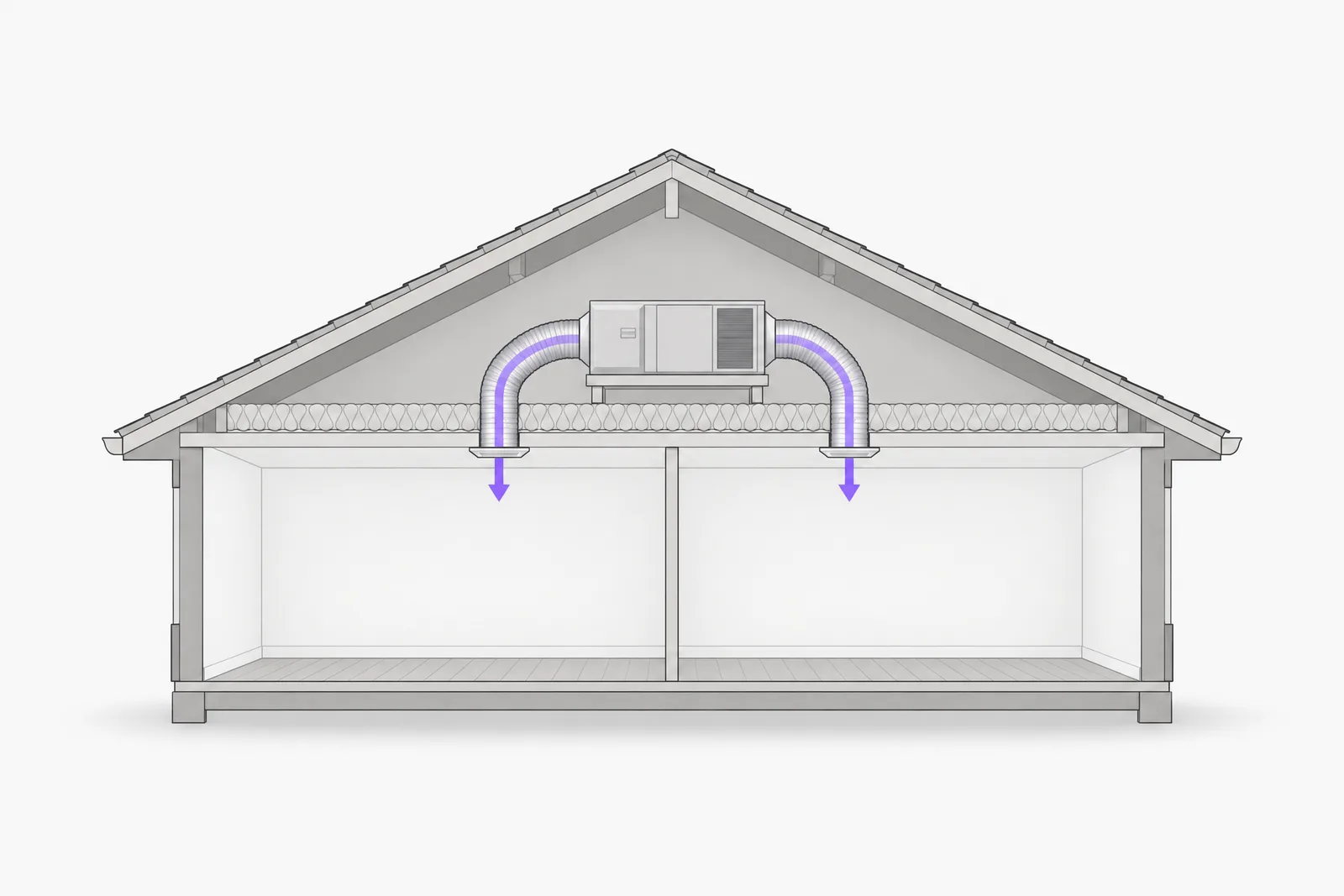
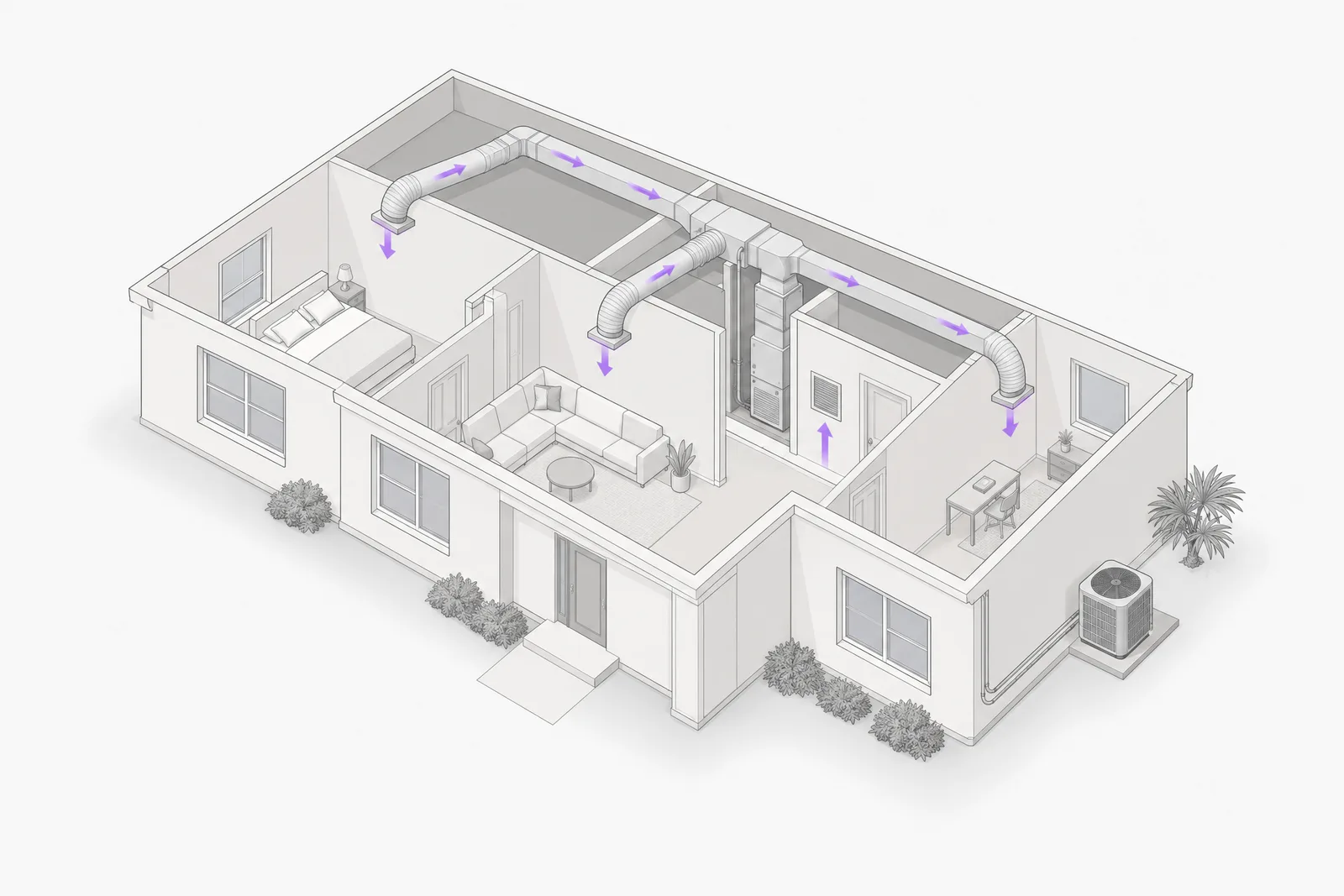
The air handler sits above the insulation, in an attic that reaches 140 degrees in August.
- 01
The return is usually too small
A system can only move the air its return will let in. Most houses have one return sized for the unit that was there in 1998. A new four-ton system behind a three-ton return is a four-ton system that behaves like three.
- 02
Static pressure, measured
It is a reading taken with a manometer across the air handler, and it tells you whether the duct system can carry what the equipment makes. We take it before and after, and both numbers go on the paperwork.
- 03
The line set, and whether it is reused
The copper between the outdoor unit and the coil. Reusing it saves a few hundred dollars and can carry the old system's oil into the new compressor. We say which we are doing and why.
- 04
Where the air handler ends up
An attic install is cheaper on the day and hotter for its whole life, and a leak up there finds the ceiling before it finds you. A garage or closet install costs more and lasts better.
Three we have put in.
Illustrations, on a demo. A real site carries systems this company fitted, photographed where they sit.
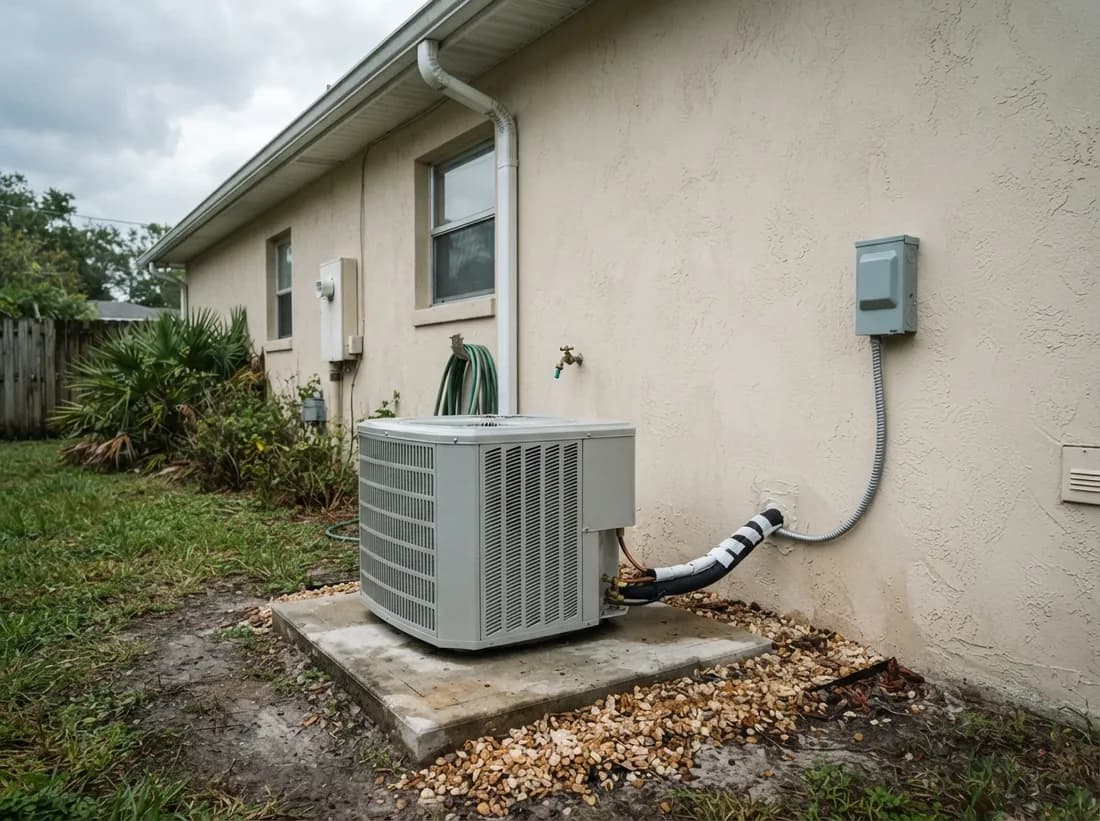
Three-ton variable-speed, single-storey
New return, ductwork left in place, static pressure down from 0.9 to 0.6.
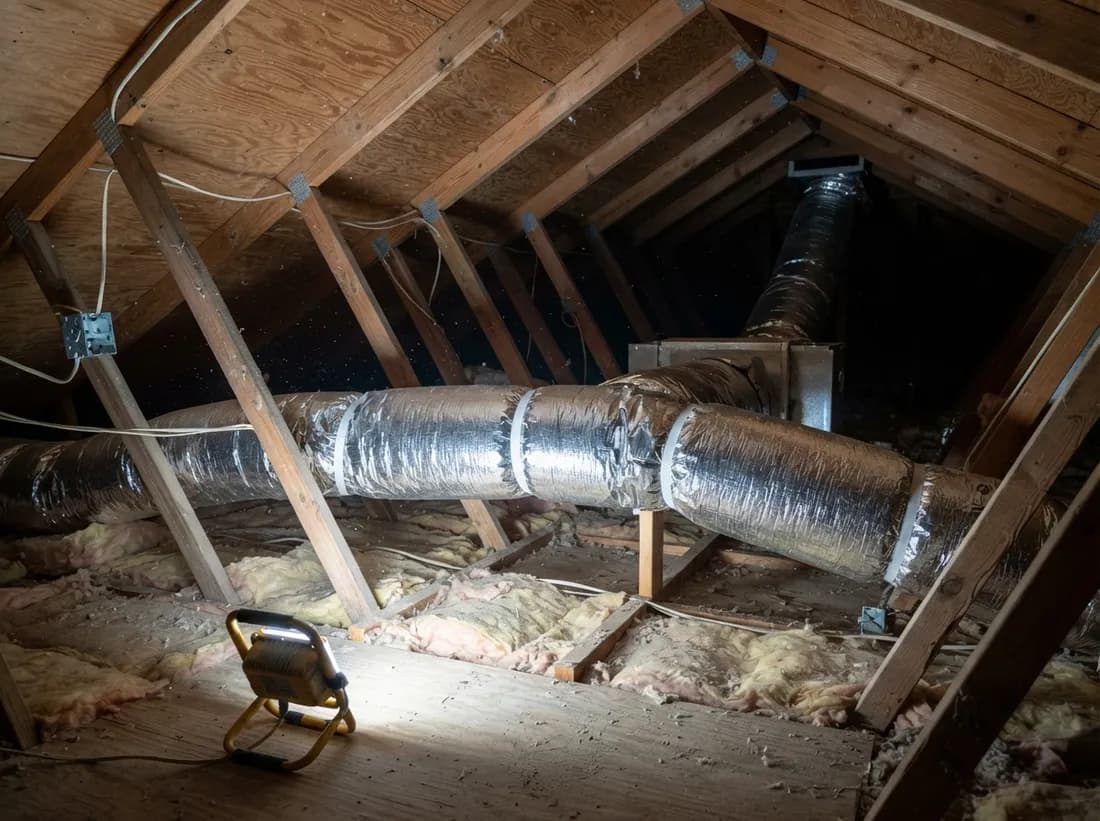
Two-stage with new ductwork
The old ducts were in the attic and leaking. Replaced with the system.
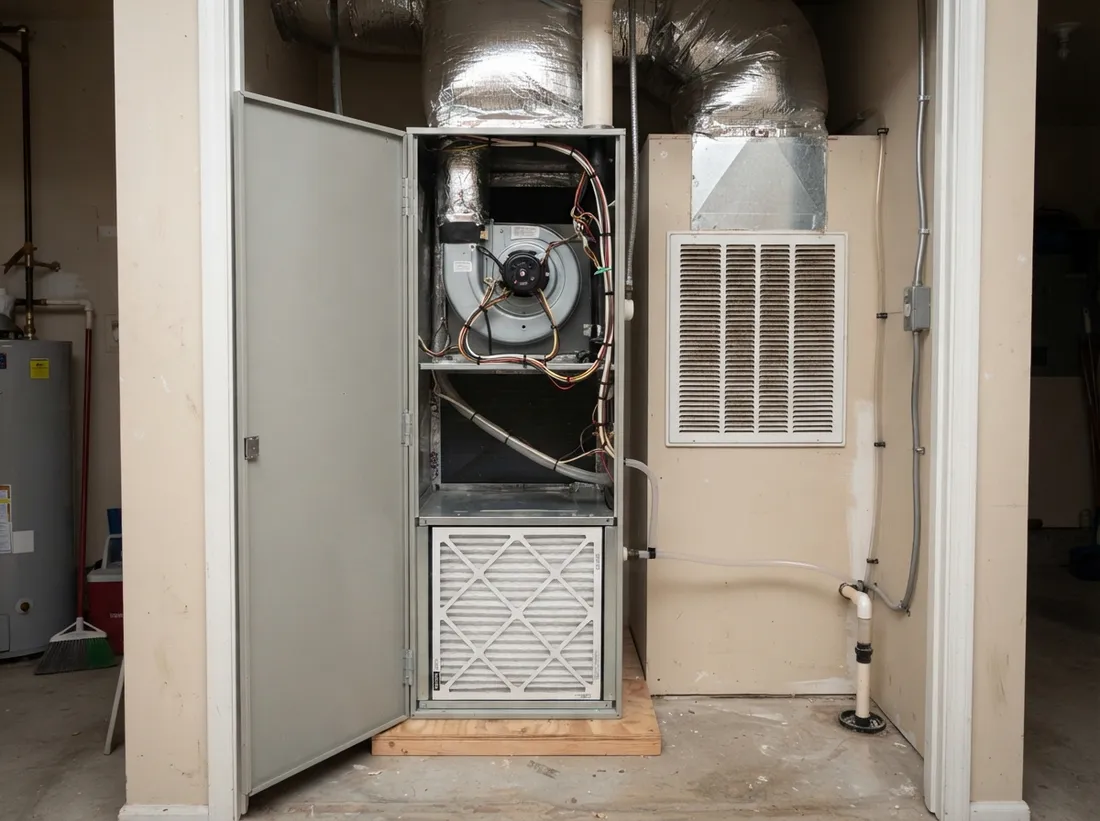
Single-stage changeout
A rental, sized at three tons after the calculation came in under the old four.
“I run the calculation myself before we quote. If it comes in smaller than what you were told, that is the number I will sell you.”
Marisol · Owner, Bayside Air Conditioning · illustrative
- Systems in Pinellas
- Count and first year
- What people said that first August
- Star rating and number of reviews
- State licence
- CAC licence number
- Manufacturer
- Dealer status
One of these is a decision. The other is a Tuesday.
A replacement is fifteen years of running cost decided in an afternoon. A repair is a part and a visit.
What people ask before they buy a system
Do I have to replace the ductwork too?
Not always. What has to be right is the return: a system can only move the air its return lets in. We measure it and tell you, and it is a separate line on the quote either way.
How long does a changeout take?
One day for equipment on existing ductwork. Two if the ducts or the return are being replaced. The permit and the county inspection follow and we handle both.
Is my system worth repairing?
Under about ten years, usually yes. Past twelve, a compressor or a coil is most of the way to a new system, and we will say so rather than fit the part.
How far out do you go?
Seminole, Largo, Pinellas Park, St. Petersburg, Clearwater, Madeira Beach. Anywhere else, ring before you assume the answer is no.

Have the size before anyone comes out.
Forty minutes in the house, at a time that suits you, and the size in writing before we talk about equipment.
You will have the size before anyone comes out, and the same size on the quote when they do.